You have done the preparation. You have waited patiently. The opportunity is finally in front of you. And yet, instead of excitement, you feel tired. Drained. Unready.
Have you ever been close to achieving something important but felt you had no energy left to seize it? Have you ever watched a good chance slip away not because you were unskilled, but because you were exhausted?
Centuries ago, the Vikings understood this exact situation. One line from an old Icelandic saga captures this feeling with surprising accuracy.
Viking proverb of the day: ‘The fish would bite on the hook now if we had the strength to drag it in,’ as quoted in the Medievalists.net.
“The fish would bite on the hook now if we had the strength to drag it in.”
– Fóstbræðra saga (The Saga of the Sworn Brothers)
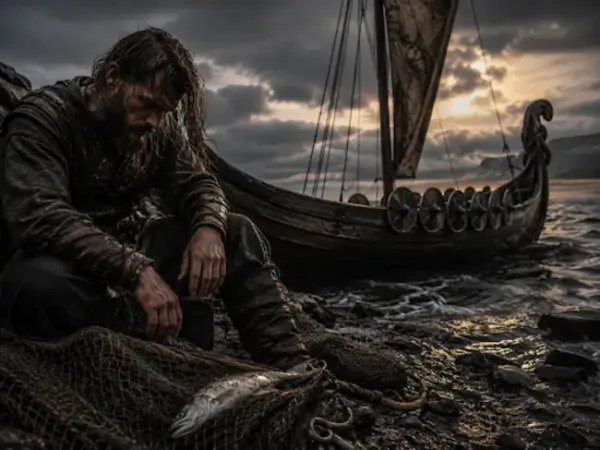
On the surface, the picture is easy to understand. A fisherman has done everything correctly. The hook is in the water. The fish is ready. The moment is perfect. But the fisherman is too weak or too tired to pull the catch in.
The deeper message goes beyond fishing. The proverb teaches that opportunity, preparation, and timing are useless if you do not have the physical or mental strength to act. Being ready is not only about skill. It is about stamina.
About Fóstbræðra saga and its background
Fóstbræðra saga is an Old Norse saga that tells the story of two sworn brothers, Þorgeir and Þormóðr, fierce warriors bound by loyalty and shared fate. The saga is known for its raw tone, dark humor, and realistic portrayal of hardship in Viking life.
Unlike heroic myths filled with gods and magic, this saga focuses on human endurance, loyalty, suffering, and survival. The characters face long journeys, harsh landscapes, hunger, cold, conflict, and emotional strain. Life in these stories is not glamorous. It is exhausting.
The proverb fits naturally into this setting. For people living in such difficult conditions, strength was everything. A missed moment could mean hunger, danger, or death. The line reflects how deeply Vikings understood the cost of fatigue at the wrong time.
For the Vikings, endurance was not a motivational concept. It was a survival requirement.
Fishing, farming, rowing, fighting, traveling long distances, and surviving harsh winters demanded constant physical effort. If you lost your strength at the wrong time, you did not just miss an opportunity, you risked losing food, safety, or life itself.
This proverb shows that Vikings recognized a hard truth: sometimes failure does not come from lack of skill or bad luck, but from exhaustion. They understood that energy is a resource that must be protected.
The fishing image is not random. Fishing was a common part of Norse life, and it required patience and effort. You had to wait quietly for the right moment. But when the moment came, you had to act quickly and decisively.
The proverb highlights a painful irony. The fisherman has succeeded in the patient part, waiting for the fish. But he fails in the action part, pulling it in.
In life, this happens often. We spend so much time preparing, waiting, planning, and enduring that when the real opportunity arrives, we have nothing left to give.
This Viking insight feels very modern. Today, people often work non-stop toward goals: careers, exams, businesses, relationships, and personal growth. They push themselves without rest, believing constant effort will guarantee success.
But then, when an interview comes, they feel burnt out. When a business chance appears, they lack motivation. When a relationship needs attention, they feel emotionally empty.
The proverb reminds us that success is not only about working hard. It is about managing your strength so that you are capable when it truly matters.
Energy management over time management
Modern advice often focuses on managing time. The Vikings, through this proverb, point toward something deeper: managing energy.
You can have perfect timing and still fail if you are exhausted. You can be skilled and still miss your chance if you are drained. Preserving strength is part of preparation.
This is a lesson in pacing yourself. Rest is not laziness. Recovery is not weakness. It is part of being ready for the moment when the “fish bites.”
In work life, this proverb warns against burnout before opportunity. In relationships, it reminds us to keep emotional energy so we can show up when needed. In personal goals, it teaches patience without self-destruction.
Many people give their best energy too early and have little left when the real test comes. The Vikings understood this pattern long ago.
The saying encourages balance: endure, but do not exhaust yourself beyond recovery.
What makes this line powerful is its honesty. It does not blame fate. It does not blame bad luck. It simply recognizes human limitation.
Sometimes, we miss chances not because the world failed us, but because we failed to protect our own strength.
That truth is uncomfortable but useful. It gives us control. If strength is part of readiness, then we can choose to preserve it.
Have you ever been close to achieving something important but felt you had no energy left to seize it? Have you ever watched a good chance slip away not because you were unskilled, but because you were exhausted?
Centuries ago, the Vikings understood this exact situation. One line from an old Icelandic saga captures this feeling with surprising accuracy.
Viking proverb of the day: ‘The fish would bite on the hook now if we had the strength to drag it in,’ as quoted in the Medievalists.net.
What this proverb means
“The fish would bite on the hook now if we had the strength to drag it in.”
– Fóstbræðra saga (The Saga of the Sworn Brothers)
On the surface, the picture is easy to understand. A fisherman has done everything correctly. The hook is in the water. The fish is ready. The moment is perfect. But the fisherman is too weak or too tired to pull the catch in.
The deeper message goes beyond fishing. The proverb teaches that opportunity, preparation, and timing are useless if you do not have the physical or mental strength to act. Being ready is not only about skill. It is about stamina.
About Fóstbræðra saga and its background
Fóstbræðra saga is an Old Norse saga that tells the story of two sworn brothers, Þorgeir and Þormóðr, fierce warriors bound by loyalty and shared fate. The saga is known for its raw tone, dark humor, and realistic portrayal of hardship in Viking life.
Unlike heroic myths filled with gods and magic, this saga focuses on human endurance, loyalty, suffering, and survival. The characters face long journeys, harsh landscapes, hunger, cold, conflict, and emotional strain. Life in these stories is not glamorous. It is exhausting.
The proverb fits naturally into this setting. For people living in such difficult conditions, strength was everything. A missed moment could mean hunger, danger, or death. The line reflects how deeply Vikings understood the cost of fatigue at the wrong time.
The Viking understanding of endurance
For the Vikings, endurance was not a motivational concept. It was a survival requirement.
Fishing, farming, rowing, fighting, traveling long distances, and surviving harsh winters demanded constant physical effort. If you lost your strength at the wrong time, you did not just miss an opportunity, you risked losing food, safety, or life itself.
This proverb shows that Vikings recognized a hard truth: sometimes failure does not come from lack of skill or bad luck, but from exhaustion. They understood that energy is a resource that must be protected.
The deeper message behind the fishing image
The fishing image is not random. Fishing was a common part of Norse life, and it required patience and effort. You had to wait quietly for the right moment. But when the moment came, you had to act quickly and decisively.
The proverb highlights a painful irony. The fisherman has succeeded in the patient part, waiting for the fish. But he fails in the action part, pulling it in.
In life, this happens often. We spend so much time preparing, waiting, planning, and enduring that when the real opportunity arrives, we have nothing left to give.
Significance of the proverb in modern life
This Viking insight feels very modern. Today, people often work non-stop toward goals: careers, exams, businesses, relationships, and personal growth. They push themselves without rest, believing constant effort will guarantee success.
But then, when an interview comes, they feel burnt out. When a business chance appears, they lack motivation. When a relationship needs attention, they feel emotionally empty.
The proverb reminds us that success is not only about working hard. It is about managing your strength so that you are capable when it truly matters.
Energy management over time management
Modern advice often focuses on managing time. The Vikings, through this proverb, point toward something deeper: managing energy.
You can have perfect timing and still fail if you are exhausted. You can be skilled and still miss your chance if you are drained. Preserving strength is part of preparation.
This is a lesson in pacing yourself. Rest is not laziness. Recovery is not weakness. It is part of being ready for the moment when the “fish bites.”
Lessons for work, relationships, and goals
In work life, this proverb warns against burnout before opportunity. In relationships, it reminds us to keep emotional energy so we can show up when needed. In personal goals, it teaches patience without self-destruction.
Many people give their best energy too early and have little left when the real test comes. The Vikings understood this pattern long ago.
The saying encourages balance: endure, but do not exhaust yourself beyond recovery.
Why this proverb still feels relevant today
What makes this line powerful is its honesty. It does not blame fate. It does not blame bad luck. It simply recognizes human limitation.
Sometimes, we miss chances not because the world failed us, but because we failed to protect our own strength.
That truth is uncomfortable but useful. It gives us control. If strength is part of readiness, then we can choose to preserve it.