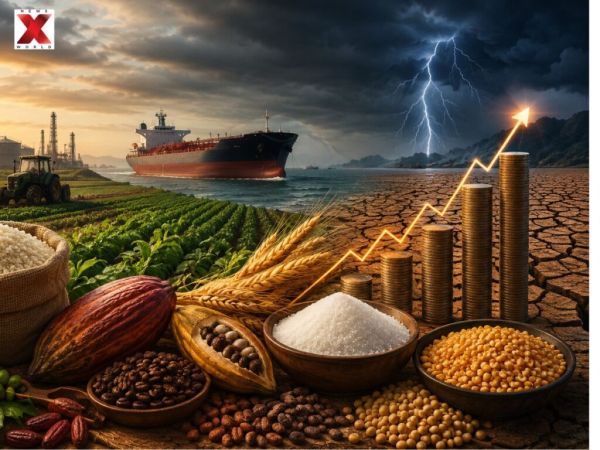
Supply Disruption Risks from Strait of Hormuz and El Nino: Global food inflation risks are rising due to possible disruption in the Strait of Hormuz and worsening El Nino conditions, according to a Citi Research report, which warned that agricultural commodity prices could face strong upward pressure over the next 6-12 months. The report said agriculture markets are vulnerable to supply disruptions caused by higher energy costs, fertiliser shortages and adverse weather conditions linked to El Nino. “Agriculture price risks are heavily skewed to the upside over the next 6-12 months, as they face major supply risks resulting from a potential prolonged closure of the Strait of Hormuz, and from likely poor weather to El Nino,” Citi Research said in its Commodities Outlook report.
Energy And Fertiliser Cost Pressures On Production
The report noted that a prolonged disruption in the Strait of Hormuz could increase the cost of agricultural production globally, as energy and fertiliser prices may rise sharply. “A prolonged SoH closure would drive up the cost of agriculture production (via higher energy prices), reduce crop yields/output (owing to lower fertiliser and lower crop protection from oil based fungicides and pesticide availability),” the report added. Citi Research also warned that higher fossil fuel prices could increase the use of agricultural commodities for biofuels, further pushing up food prices.
Rising Food Prices And El Nino Weather Impact
The report said traded agricultural prices have already started rising this year. “Food prices are rising, with traded agricultural prices up 13 per cent year-to-date through mid-May,” the report said. According to the report, commodities such as sugar, cocoa and coffee are among the most exposed to weather- risks from El Nino and energy- supply disruptions. Citi Research said El Nino could lead to hotter temperatures and lower rainfall across several parts of Asia, which may hurt crop production and tighten food supplies globally. The report also highlighted that broader food indices were already up 5 per cent through April this year, indicating increasing pressure on global food inflation. The Citi report comes at a time when global commodity markets remain volatile amid ongoing tensions in the Middle East and concerns over supply chain disruptions affecting energy and food markets worldwide.
Aishwarya is a journalism graduate with over 4.5 years of experience thriving in the buzzing corporate media world. She’s got a knack for decoding business news, tracking the twists and turns of the stock market, covering the masala of the entertainment world, and sometimes her stories come with just the right sprinkle of political commentary. She has worked with several organizations, interned at ZEE and gained professional skills at TV9 and News24, And now is learning and writing at NewsX, she’s no stranger to the newsroom hustle. Her storytelling style is fast-paced, creative, and perfectly tailored to connect with both the platform and its audience. Moto: Approaching every story from the reader’s point of view, backing up her insights with solid facts.
Always bold with her opinions, she also never misses the chance to weave in expert voices, keeping things balanced and insightful. In short, Aishwarya brings a fresh, sharp, and fact-driven voice to every story she touches.
The post Global Food Inflation Risks Surge As Strait Of Hormuz And El Nino Threaten Supply Chains appeared first on NewsX.
Contact to : xlf550402@gmail.com
Copyright © boyuanhulian 2020 - 2023. All Right Reserved.