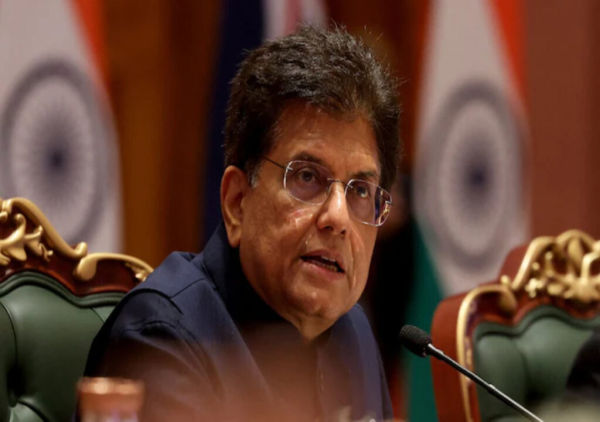
New Delhi: India will finalise and announce the remaining details of its bilateral trade agreement with the United States only after Washington offers Indian exporters a preferential tariff rate that gives them an advantage over competing countries, Commerce and Industry Minister Piyush Goyal said.
Speaking at a national workshop on leveraging free trade agreements (FTAs) on September 3, Goyal made it clear that tariff competitiveness remains a key condition for concluding the India-US bilateral trade agreement (BTA). He said India is ready to complete the agreement once the US provides tariff terms that place Indian exporters in a stronger position compared with their global competitors.
India seeks a competitive edge for exporters
Goyal’s comments underline New Delhi’s focus on ensuring that Indian businesses do not enter the US market at a disadvantage.
Tariffs directly influence the final price of exported products. If competing countries receive lower duties from the US, their products can become relatively cheaper for American buyers. This can affect India’s ability to compete in sectors where exporters from other Asian economies are also seeking greater access to the US market.
The minister said India would finalise the BTA once Washington provides a preferential tariff rate compared with India’s competitors. Until then, the remaining details of the agreement will not be announced.
The position indicates that New Delhi is looking beyond simply securing market access. The government wants the terms of that access to translate into a meaningful commercial advantage for Indian exporters.
US trade deal important for India
The United States is among India’s most important trading partners, making the bilateral trade agreement a significant component of the country’s broader trade strategy.
For Indian manufacturers and exporters, favourable tariff treatment could improve price competitiveness in the US market. However, the actual benefits will depend on the final tariff structure and the products covered by the agreement.
The negotiations therefore have implications across a wide range of businesses, particularly those competing with suppliers from countries that already enjoy favourable access to the American market.
Goyal’s latest remarks also reinforce a position he has expressed previously: India does not want an agreement that leaves its exporters at a relative disadvantage.
Goyal stresses quality and technology
While tariff concessions remain an important part of the negotiations, Goyal also emphasised that Indian companies must improve their own competitiveness.
He called on exporters to raise the quality and scale of their products, invest more in technology and build stronger supply chains. Consistent quality standards, he said, will be essential for Indian products to compete successfully in international markets.
This is significant because lower tariffs alone may not be enough to substantially increase India’s exports. Businesses also need the production capacity, technology, logistics and quality standards required to meet international demand.
Goyal said the government, industry and micro, small and medium enterprises (MSMEs) would need to work together to convert greater market access into higher exports and employment.
India expanding its FTA network
The minister also highlighted India’s wider free-trade strategy.
According to Goyal, India has signed nine FTAs under Prime Minister Narendra Modi’s leadership. With negotiations continuing with several other countries, he said nearly 75% of global trade could eventually become accessible to Indian producers and exporters.
However, Goyal urged Indian businesses to make better use of these agreements instead of viewing FTAs merely as mechanisms for tariff reductions.
The government’s broader objective is to use market access to expand India’s export base, increase manufacturing activity and generate employment.
What the tariff issue means for Indian businesses
The tariff question is particularly important because Indian exporters compete globally on price as well as quality.
A preferential tariff compared with competing economies can potentially make Indian products more attractive to US importers. On the other hand, if Indian goods face higher duties than products from competing countries, exporters may have to absorb some of the additional cost or risk losing market share.
The government’s insistence on a competitive tariff framework is therefore aimed at ensuring that any final India-US agreement delivers tangible benefits for domestic businesses.
At the same time, companies will need to prepare for stronger competition in global markets by improving productivity, adopting newer technologies and maintaining consistent quality.
Deal awaits final tariff terms
Goyal’s statement suggests that negotiations have reached a stage where India is prepared to conclude the agreement, but the tariff advantage remains an important outstanding issue.
The minister did not indicate a specific deadline for the final announcement. Instead, he said India would move ahead as soon as the US provides a preferential rate that compares favourably with those offered to India’s competitors.
For now, the India-US BTA remains closely watched by exporters and industry groups. The final tariff structure could determine how effectively Indian companies can use access to the American market and whether the agreement provides the competitive advantage New Delhi is seeking.
India’s approach reflects a broader shift from simply pursuing more trade agreements to ensuring that such agreements generate commercially meaningful opportunities for Indian producers, exporters and MSMEs.
Contact to : xlf550402@gmail.com
Copyright © boyuanhulian 2020 - 2023. All Right Reserved.