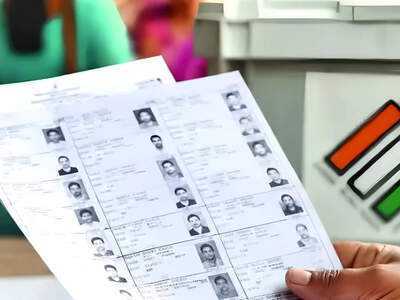
New Delhi: The Supreme Court on Tuesday observed that some of the notices issued by the (ECI) during its Special Intensive Revision () of electoral rolls in Delhi appeared to have been issued "almost mechanically".
Suggesting an additional layer of scrutiny before notices are sent to voters, a three-member bench comprising Chief Justice of India (CJI) Surya Kant and justices Joymalya Bagchi and V Mohana asked the ECI to examine whether additional filters were necessary before such notices reached voters. The bench also suggested that the poll body should allow voters to submit replies through WhatsApp and email, besides providing assistance through booth level officers.
The development took place during the hearing of a batch of pleas challenging the process, particularly notices issued to voters under the category of 'logical discrepancies'.
'logical discrepancy' not defined, EC used it first in 2025
The term 'logical discrepancy' is not a defined term in the ECI's roll rulebooks or protocols. It was first introduced by the ECI in Phase 2 of SIR in 2025 as an administrative category to red-flag voter records with data inconsistencies or mathematical/scientific gaps.
Also read |
These anomalies could range from age gaps between parent and child to number of children or siblings, or contradictory lineage data, and are subjected to manual verification by the ECI, officials in the know have indicated. These came to the fore most starkly during the SIR in West Bengal ahead of the assembly polls.
The ECI, however, is yet to announce any clear-cut criteria for determining 'logical discrepancies', which are said to be mostly flagged through software/machine readings, generating multiple notices to people in the process.
Contact to : xlf550402@gmail.com
Copyright © boyuanhulian 2020 - 2023. All Right Reserved.