For a while, artificial intelligence (AI) has largely meant interacting with a piece of software: a chatbot, underlined by Large Language Models (LLMs) that would talk or write responses, a diffusion model generating a photo, a reasoning model distilling data and creating charts, or write code. But that’s just part of the story as it unfolds, because the next evolution could be a significant shift that sees AI move into the physical world.
Perception AI, generative AI, and reasoning AI are three often overlapping capabilities in AI’s advancement. Agentic AI provided an important conceptual bridge; AI was no longer limited to producing an answer but could increasingly plan and execute a sequence of tasks. Physical AI takes that idea into the real world. In this context, a machine can perceive its environment, reason about space and motion, interact with objects, and perform actions autonomously or semi-autonomously in the real world.
This transformation is somewhat different from the first visuals that would inevitably surface, of industrial robots, which are programmed, structured and built for specific tasks or environments. Now, think of an AI model, with a physical body made up of sensors, actuators, wheels, legs, even dexterous robotic hands.
In the age of humanoid robots, the future is flash
Humanoid robots are emerging as a notable area of development.
An important software foundation of physical AI is the combination of Vision-Language-Action (VLA) models and embodied-reasoning models. By connecting visual and language inputs to physical actions, VLAs can provide an important intelligence layer for machines capable of sophisticated interactions. This result is a distributed edge-cloud architecture, which shifts some processing away from data centres and on to the device itself. A hybrid model is an architectural choice, with local/edge processing for real-time decision making such as obstacle avoidance and route planning to reduce latency, and cloud-based processing for computationally intensive workloads.
Because these machines are designed to operate in dynamic, unstructured environments and often interact directly with humans, they must continuously adapt to unpredictable situations. By executing real-time decisions locally, such as adjusting a delicate grip, maintaining physical balance, or avoiding a sudden obstacle, edge processing helps reduce the impact of network latency in scenarios where a split-second delay could have physical consequences. Meanwhile, the cloud processes computationally intensive workloads, powering the continuous learning, large-scale model updates, and data aggregation required for the robot's long-term cognitive evolution.
Currently, autonomous driving technology provides a prominent example of physical AI in real-world deployment. It has developed to not just perceive its surroundings and localise itself on the route but also interpret road infrastructure that can often change and help predict the behaviour of other road users. An AI model generating a paragraph of text can afford to take a couple of seconds more to get a response from a data centre. A robot or an automated vehicle approaching an obstacle in the real world doesn’t have any time to wait.
Physical AI implications extend far beyond humanoid robots. Industrial environments can combine humanoid robots and AI powered machines alongside human workforce and existing automation. Agricultural machinery equipped with cameras and sensors for richer environmental awareness can make better decisions locally, with low latency. Surgical robots may increasingly assist medical professionals. Robotics companies that effectively integrate hardware, models, data and simulation capabilities may be better positioned to compete.
As physical AI systems operate and adapt continuously, the various multimodal sensors including vision, speech, and telemetry, generate significant volumes of data. This may require organisations to rethink aspects of their infrastructure, as it raises the demand for high- performance local flash storage for various use-cases, including buffering sensor streams of data, retaining operational data, in addition to supporting simulation and long-term data analysis. Data centers designed with high-capacity and high-performance flash SSDs may be well positioned to support certain AI workloads.
Physical AI could represent an important next frontier. The role of flash storage may continue to grow as physical AI systems generate and process increasing amounts of data.
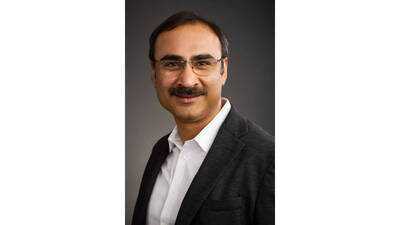
- By Mrinal Kochhar, Senior Vice President of SSD Engineering, SanDisk
Disclaimer: This article has been produced on behalf of Sandisk by Times Internet’s Spotlight team.
Contact to : xlf550402@gmail.com
Copyright © boyuanhulian 2020 - 2023. All Right Reserved.