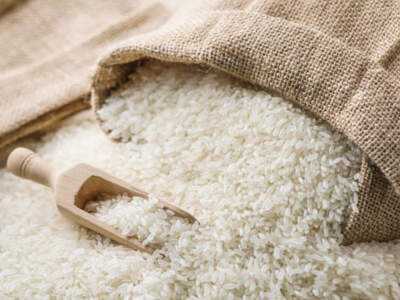
The Centre has allowed five southern states to impose stock limits on rice and paddy, wherever necessary, until January 31, 2027, as part of measures to check hoarding and keep prices under control.
The government has also made it mandatory for traders, wholesalers, retailers, big chain retailers and processors/millers across the country to disclose their rice and paddy stocks every Friday on the (foodstock.dfpd.gov.in).
Also Read:
The order, issued on November 6, requires entities to declare stocks under six categories including basmati rice, non-basmati premium rice, non-basmati rice, parboiled rice, broken rice and paddy. Those failing to register on the portal or violating prescribed stock limits will face action under Sections 6 and 7 of the Essential Commodities Act, 1955.
The Centre has conveyed its concurrence to Andhra Pradesh, Karnataka, Kerala, Tamil Nadu and Telangana to impose stock limits through appropriate control orders, wherever required. The move is aimed at ensuring adequate market availability and preventing hoarding and black marketing.
Also Read:
Separately, the government has decided to allocate additional quantities of Bharat Rice to NAFED, NCCF and Kendriya Bhandar to expand its availability across the country, particularly in southern states. The agencies have been asked to explore different distribution channels to improve access to the subsidised rice.
The Centre has also doubled the rice sale target under the Open Market Sale Scheme (Domestic) [OMSS (D)] for 2026-27 from 25 lakh metric tonnes (LMT) to 50 LMT.
According to the government, 25 LMT of rice had already been sold to private parties through OMSS (D) e-auctions up to October 31, 2026, compared with 11 LMT during the corresponding period of the previous financial year.
The measures are aimed at increasing domestic supplies, preventing hoarding and maintaining price stability.
Contact to : xlf550402@gmail.com
Copyright © boyuanhulian 2020 - 2023. All Right Reserved.