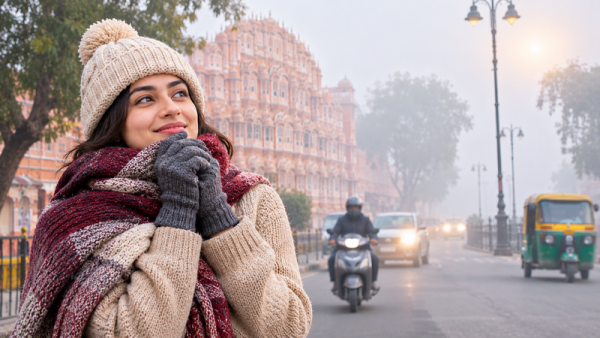
Winter conditions are gradually strengthening across northern India as November enters its final week. Rajasthan, Delhi-NCR, Punjab, Haryana and Uttar Pradesh are experiencing colder mornings and evenings, while fog and mist are affecting visibility in several areas.
According to the weather report dated November 24, 2026, minimum temperatures have been declining across several northern cities. Although daytime sunshine continues to provide some relief, temperatures are dropping noticeably after sunset.
Jaipur and several other districts of Rajasthan are witnessing predominantly dry weather, with colder nights signalling the transition towards more intense winter conditions.
The coming days could bring a further decline in minimum temperatures, prompting residents to prepare for colder weather.
Rajasthan Weather Update: Cold Nights Return Across Several Districts
Winter is becoming increasingly noticeable across Rajasthan, particularly during the early morning and late evening hours. Clear skies and sunshine are keeping daytime conditions relatively comfortable, but temperatures are falling after sunset.
The Shekhawati region, which includes Sikar, Churu and Jhunjhunu, is experiencing more pronounced nighttime chill. Parts of western Rajasthan are also witnessing colder conditions.
Dry weather and clear nighttime skies can allow heat to escape more rapidly from the ground, contributing to lower overnight temperatures.
Residents in rural areas and open locations may experience greater discomfort during the early morning hours, particularly when cold winds are present.
Jaipur Weather: Sunny Afternoons but Chilly Mornings and Nights
Rajasthan's capital, Jaipur, is experiencing a noticeable seasonal change as winter approaches December.
While daytime sunshine continues to offer relief, the difference between afternoon and nighttime temperatures is becoming more apparent.
People travelling to workplaces, schools and colleges during the early morning hours may feel increased cold, especially those commuting on two-wheelers.
Residents are advised to keep warm clothing available and take appropriate precautions when stepping outdoors before sunrise or after sunset.
The supplied weather report indicates that Jaipur is likely to experience predominantly dry conditions in the coming days, with limited chances of rainfall.
Morning Fog Spreads Across Northern India
Several areas of Delhi-NCR, Haryana, Punjab and Uttar Pradesh are witnessing light to moderate fog during the morning hours.
Fog develops when moisture in the air condenses into tiny water droplets near the ground. Lower temperatures, calm winds and sufficient atmospheric moisture can create favourable conditions for its formation.
Reduced visibility may cause difficulties for motorists, particularly on highways, rural roads and busy urban routes.
As winter progresses, fog-related disruptions may become more frequent in parts of northern India. Travellers should check local weather and transport advisories before beginning long-distance journeys.
Why Are Temperatures Falling Across North India?
The gradual decline in temperatures is associated with seasonal atmospheric changes and the movement of colder air towards the northern plains.
According to the original report, snowfall in mountainous regions and cold northerly winds are contributing to the changing weather conditions.
Clear skies, longer nights and reduced daytime heating can also influence minimum temperatures during late November and December.
However, colder weather alone does not necessarily indicate an official cold wave. The India Meteorological Department (IMD) uses specific temperature criteria to classify cold-wave conditions.
North India Weather Conditions at a Glance
| State/Region | Reported Weather Conditions |
|---|---|
| Jaipur | Dry weather, sunny afternoons and colder nights |
| Sikar | Increased nighttime chill |
| Churu | Colder morning and evening conditions |
| Jhunjhunu | Declining nighttime temperatures |
| Western Rajasthan | Predominantly dry and chilly weather |
| Delhi-NCR | Morning fog and colder conditions |
| Haryana | Light to moderate morning fog |
| Punjab | Chilly mornings with fog in several areas |
| Uttar Pradesh | Falling temperatures and morning mist |
Air Pollution May Add to Winter Discomfort
Winter weather can also create atmospheric conditions that allow pollutants to accumulate near the ground.
During periods of low wind speed and temperature inversion, pollutants may disperse more slowly, particularly in densely populated urban areas.
The combination of fog, moisture and airborne pollutants can sometimes create hazy conditions, affecting visibility and potentially causing discomfort for people with respiratory problems.
Residents should monitor local Air Quality Index (AQI) readings, particularly before undertaking outdoor exercise or prolonged outdoor activities.
Children, senior citizens and individuals with asthma or other respiratory conditions should exercise additional caution when air quality deteriorates.
Weather Forecast: Minimum Temperatures Could Fall Further
According to the supplied weather report, northern India and Rajasthan may continue to experience mainly dry weather over the next few days.
Minimum temperatures could decline by another 1 to 2 degrees Celsius in some areas, while the possibility of widespread rainfall remains low.
The intensity of winter conditions will depend on regional wind patterns, cloud cover, atmospheric moisture and other meteorological developments.
Residents should follow official IMD forecasts for location-specific temperature updates, fog warnings and cold-wave alerts.
Important Safety Tips for Cold Weather and Fog
As winter conditions strengthen, following a few precautions can help reduce weather-related risks.
- Wear warm, layered clothing during early morning and nighttime hours.
- Use low-beam headlights and fog lights, where appropriate, while driving in foggy conditions.
- Reduce driving speed and maintain a safe distance from other vehicles.
- Avoid unnecessary travel when visibility becomes dangerously low.
- Pay special attention to the health of children and elderly family members.
- Maintain adequate hydration and consume balanced, nutritious meals.
- Check local weather forecasts and air quality updates before outdoor activities.
- Never use charcoal or unvented fuel-burning heaters inside enclosed rooms.
Winter Conditions Expected to Strengthen as December Approaches
The final week of November marks an important seasonal transition across northern India. With colder nights, morning fog and declining minimum temperatures, residents are beginning to experience more noticeable winter conditions.
Although daytime sunshine may continue to provide temporary relief across Rajasthan, early mornings and evenings are likely to remain chilly.
People planning outdoor activities, daily commutes or long-distance journeys should stay informed about changing weather conditions and take necessary precautions.
Official Weather Updates: India Meteorological Department
Disclaimer: This article is based on the supplied weather report. Temperature trends and forecasts have not been independently verified against the latest IMD bulletin. Readers should consult official meteorological updates for confirmed forecasts and weather warnings.
Contact to : xlf550402@gmail.com
Copyright © boyuanhulian 2020 - 2023. All Right Reserved.